 Rare Leaf
Pet-safe houseplants for cats and dogs: list based on the ASPCA
The ASPCA, which runs the Animal Poison Control Center, lists these houseplants as non-toxic to cats and dogs. When the ASPCA doesn't cover a species, we rely on a university source and say so for that plant. The list covers 11 plants from our atlas, each with a link to its source and its care page.
🐾 Non-toxic doesn't mean harmless. The ASPCA notes that even a non-toxic plant such as spider plant can cause mild GI upset, most commonly vomiting and diarrhea. If your pet eats a lot of any plant or seems unwell, call your vet.
Non-toxic houseplants in our atlas
baby rubber plant Peperomia obtusifolia
- Light
- bright indirect
- Watering
- let mostly dry out
- Difficulty
- easy
cast iron plant Aspidistra elatior
- Light
- tolerates low light
- Watering
- when the top dries
- Difficulty
- easy
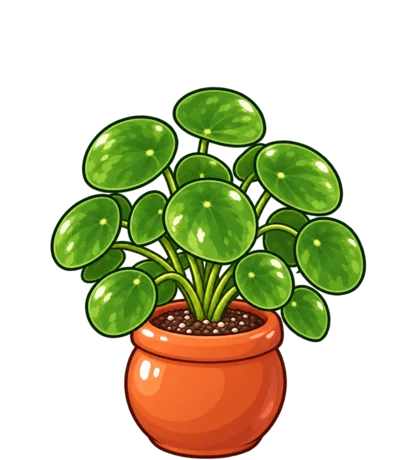
Chinese money plant Pilea peperomioides
- Light
- bright indirect
- Watering
- when the top dries
- Difficulty
- easy

spider plant Chlorophytum comosum
- Light
- medium
- Watering
- keep lightly moist
- Difficulty
- easy
string of turtles Peperomia prostrata
- Light
- bright indirect
- Watering
- when the top dries
- Difficulty
- easy
watermelon peperomia Peperomia argyraea
- Light
- bright indirect
- Watering
- when the top dries
- Difficulty
- easy
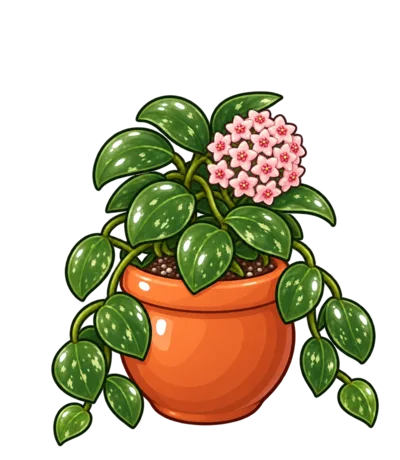
wax plant Hoya carnosa
- Light
- bright, some sun ok
- Watering
- let mostly dry out
- Difficulty
- easy
nerve plant Fittonia albivenis
- Light
- bright indirect
- Watering
- keep lightly moist
- Difficulty
- moderate
peacock plant Goeppertia makoyana
- Light
- medium
- Watering
- keep lightly moist
- Difficulty
- moderate
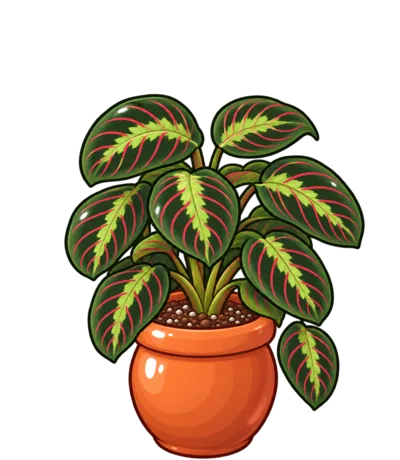
prayer plant Maranta leuconeura
- Light
- medium
- Watering
- keep lightly moist
- Difficulty
- moderate
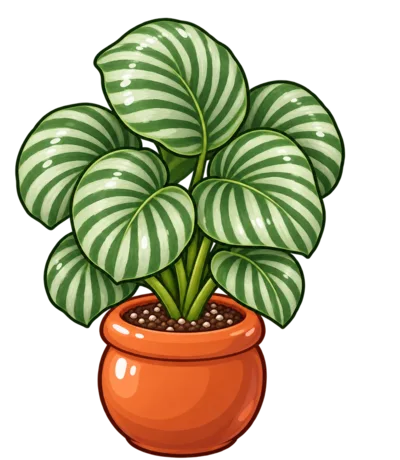
calathea orbifolia Goeppertia orbifolia
- Light
- bright indirect
- Watering
- keep lightly moist
- Difficulty
- demanding
Which ones tolerate less light?
From this list, these are fine in a spot with less light: cast iron plant, spider plant, peacock plant, prayer plant.
The other 25 plants in our atlas are toxic or mildly toxic to pets, or neither the ASPCA nor a university source lists them as non-toxic. You'll find every plant in one table in our guide Houseplants Toxic to Cats and Dogs: 22 Popular Plants Checked Against ASPCA. You can also filter the whole atlas with "Pet-safe": Plant atlas.