 Rare Leaf
Houseplant Tissue Culture: What TC Means, Why Thai Constellation Is Lab-Grown, How to Acclimate
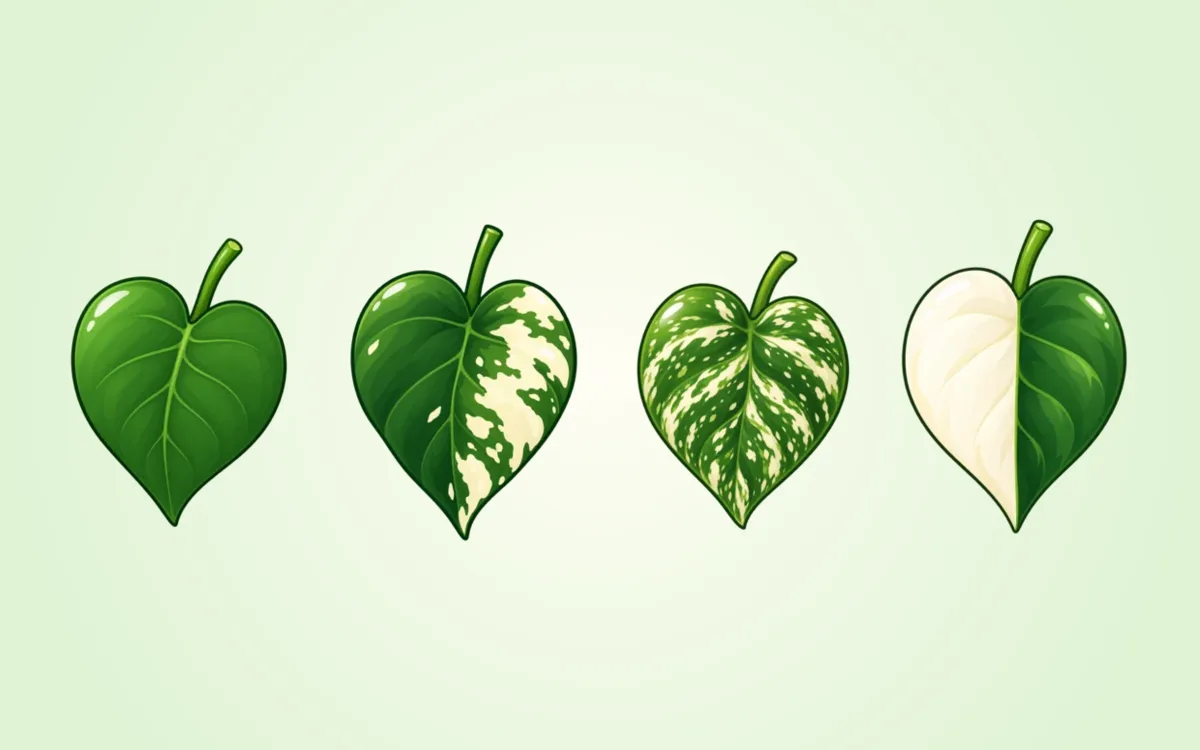
Browse rare plant listings and you’ll see “TC” everywhere. It stands for tissue culture: a small plantlet, sometimes still in a plastic tub or flask, that started life in a lab. Tissue culture is why so many houseplants are available in large numbers today, and it’s the reason Monstera deliciosa ‘Thai Constellation’ exists at scale at all.
What is plant tissue culture?
University of Florida IFAS describes micropropagation as a form of tissue culture used to rapidly propagate a large number of plants. Sterilized pieces of plant tissue go into sterile containers with a nutrient-enriched medium, where the cells multiply and produce plantlets.
Viswambharan Sarasan of the Royal Botanic Gardens, Kew, sums it up in Chemistry World: micropropagation means you can grow any plant from any part of the plant in a defined culture medium.
The four stages
According to University of Florida IFAS, micropropagation runs through these stages:
- Initiation: tissue from the mother plant is sterilized and placed in an aseptic environment.
- Multiplication: the tissue produces new shoots, which are divided again and again.
- Rooting: shoots are rooted, typically with auxin (a plant hormone).
- Acclimatization: plantlets are gradually adapted to conditions outside the lab.
That last stage is the one collectors run into. If you buy a plantlet straight out of the lab container, acclimatization is your job.
How common is it?
University of Florida IFAS reports that over half of all tropical foliage crops are now propagated through micropropagation. Its list of genera includes aroids such as Philodendron, Syngonium, Alocasia, and Anthurium.
Why Thai Constellation is tissue cultured
Chemistry World reports that Monstera deliciosa ‘Thai Constellation’ was first discovered in a tissue culture lab in Thailand. Its creamy speckles are a type of variegation caused by a mix of normal and mutated, chlorophyll-free cells in the meristem (the growing tip).
Here’s the catch: according to the same article, chimeric variegation isn’t heritable. Traditional breeding can’t reproduce it; only cloning can. University of Minnesota Extension makes the same point from the buyer’s side: seeds don’t carry variegation, so don’t buy monstera seeds sold as variegated.
Even in the lab, it isn’t easy. Chemistry World describes how grower Costa Farms announced plans to mass-produce Thai Constellation for US stores, then said in March 2022 that it had run into problems producing it at scale. Clemson University horticulture professor Jeffrey Adelberg suggests in the article that rapid ramp-up was the issue: “you’re losing the white.”
Today Costa Farms describes Thai Constellation variegation as stable, in contrast to monstera ‘Albo’, which it calls notoriously unstable. See Thai Constellation vs. Albo for how they differ.
Tissue culture pros and cons
| Pros | Cons | |
|---|---|---|
| Health | helps eliminate systemic diseases in starting material (UF/IFAS) | plantlets fresh out of the lab are prone to drying out and fungal problems |
| Volume | huge numbers of plants from one mother | — |
| Uniformity | healthy, uniform young plants year-round (UF/IFAS) | somaclonal variation: some plantlets may differ from the mother |
| Speed | new cultivars reach market in 2–3 years instead of 5–7 (UF/IFAS) | variegation in chimeras can be lost during rapid multiplication (Chemistry World) |
| For buyers | mass-produced cultivars are easier to find | small plantlets take a long time to mature |
Somaclonal variation
This matters most for variegated plants. University of Florida IFAS warns that adventitious shoots, especially those formed through a callus phase (an unorganized mass of cells), can produce plantlets that aren’t true to type. That’s called somaclonal variation.
A 2011 study by Sato and colleagues in PLOS ONE, working with African violets (Saintpaulia), found that most of these variants weren’t caused by mutations already present in the leaf tissue. They arose new, during the tissue culture process itself.
What that means for you: a TC plantlet of a variegated cultivar won’t necessarily match the photo of the mother plant. Stable cultivars are more predictable than unstable chimeras. Our guide to variegation reversion explains chimeras in more detail.
How to acclimate tissue culture plants at home
Lab plantlets grew in a sealed, sterile container on a nutrient medium. University of Florida IFAS names two main challenges during acclimatization: poor control of water loss and reduced photosynthetic ability in plants grown in vitro. So the move to normal conditions has to be gradual.
These steps adapt University of Florida IFAS guidance for growers to a home setup:
- Use a fine mix. For begonias, UF/IFAS recommends a fine soilless medium without large bark pieces. For commercial foliage plants, it specifies a peat-based mix with a pH of 5.8–6.1.
- Transplant gently. Remove the plantlets from the container and set them into moist mix. The roots are fragile.
- Cover them. A clear tub, dome, or bag keeps humidity high. UF/IFAS stresses that humidity is key at this stage.
- Lower humidity gradually. Plantlets need slow exposure to normal humidity. UF/IFAS notes some scientists skip the dome and just crack the lid of the culture vessel to allow air exchange.
- Start with low light. UF/IFAS says light should start low and increase gradually. Shade and misting help plantlets adjust to warmer, sunnier conditions.
- Go easy on fertilizer. For commercial foliage production, UF/IFAS recommends low initial fertilization.
- Watch for mold. High humidity invites fungal disease, so check often and vent the cover.
How long? For begonias, UF/IFAS gives one to two weeks, depending on the species. With aroids, don’t rush. Take the cover off for good once the plantlet stays perky without it and starts pushing new leaves.
TC plantlet vs. cutting
| TC plantlet | Cutting from a mature plant | |
|---|---|---|
| Origin | lab-grown clone from a small piece of tissue | node from the mother plant’s stem |
| Size | small | larger, often with a mature leaf |
| Fragility | high until acclimated | lower |
| Disease | lab propagation helps eliminate systemic diseases (UF/IFAS) | carries whatever the mother had |
| Pattern fidelity | risk of somaclonal variation | depends on the node you pick |
| Main job after buying | acclimating | rooting |
Tissue culture glossary
- In vitro: literally “in glass,” meaning inside a lab container.
- Explant: the piece of mother-plant tissue a culture starts from.
- Callus: an unorganized mass of cells. UF/IFAS notes shoots formed through callus carry a higher risk of variation.
- Meristem: the growing tip, where cells actively divide.
- Acclimatization (hardening off): gradually adjusting a plantlet to conditions outside the lab.
- Deflasking: taking plantlets out of their culture container.
Buying TC plants: what to check
- Size. A TC plantlet is small. It will be a long time before it looks like the mature mother in the listing photo.
- Actual variegation. For variegated cultivars, ask for a photo of the specific plantlet, not just the mother.
- Deflasked vs. acclimated. Plantlets fresh out of the lab are the most delicate. If you’re unsure about acclimating, buy one the grower has already hardened off.
- Quarantine. Even a lab-grown plant can pick up pests in transit. See buying rare houseplants for a quarantine routine.
In the game
‘Thai Constellation’ is one of six species in Rare Leaf Tycoon. The game doesn’t model tissue culture, but it works on the same idea as real variegation: a stable line gives a stable pattern 76% of the time, while an unstable line is more of a gamble, with an 8% chance at a rare leaf.
FAQ
What does TC mean for houseplants?
TC stands for tissue culture. The plant was produced in a lab by multiplying a small piece of tissue in a sterile container on a nutrient medium, not grown from a cutting or seed.
Are tissue culture plants clones?
Usually, yes. But University of Florida IFAS notes that shoots formed through a callus phase can show somaclonal variation, meaning some plantlets differ from the mother plant.
Why is Monstera Thai Constellation tissue cultured?
According to Chemistry World, it was first discovered in a tissue culture lab in Thailand. Chimeric variegation is not inherited through seed and can only be faithfully reproduced by cloning.
How long does it take to acclimate tissue culture plants?
It depends on the species. For begonias, University of Florida IFAS gives one to two weeks under a humidity dome with humidity lowered gradually. Aroids may need longer, so go by how the plant responds.
Are tissue culture plants worse than cuttings?
Not worse, just different. They are smaller and more prone to drying out at first, but lab propagation helps eliminate systemic diseases. A cutting from a mature plant is bigger and tougher from day one.
Sources
- University of Florida IFAS (EDIS) — Commercial Production of Ornamental Tropical Foliage Plants: Micropropagation
- University of Florida IFAS (EDIS) — A Beginner’s Guide to Begonias: Micropropagation and Tissue Culture
- Chemistry World (Royal Society of Chemistry) — The plant trade’s scientific secrets
- Sato, Hosokawa, Doi (2011), PLOS ONE — Somaclonal Variation Is Induced De Novo via the Tissue Culture Process
- Costa Farms — Monstera Thai Constellation
- University of Minnesota Extension — Propagating Monstera deliciosa
Care information is general; every plant and home is different. Growing is simplified in the game.