 Rare Leaf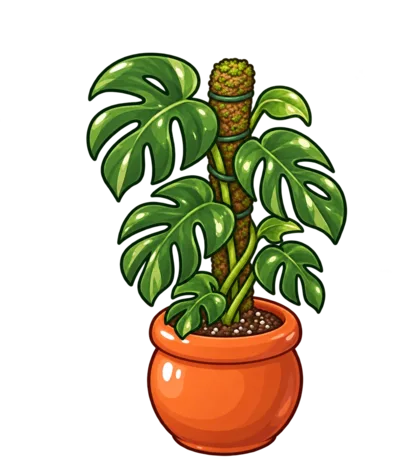
Mini Monstera Care (Rhaphidophora tetrasperma): Light, Water, Propagation, Problems
Rhaphidophora tetrasperma · Araceae
The “mini monstera” (Rhaphidophora tetrasperma) looks like a scaled-down Monstera deliciosa: dark green, split leaves on slender climbing stems with aerial roots. It grows fast, takes up little space and produces split leaves while still young, which is why it has become one of the most popular climbing houseplants.
How to identify mini monstera
Rhaphidophora tetrasperma is an evergreen climbing plant in the arum family (Araceae). Kew’s Plants of the World Online gives its native range as Peninsular Thailand to Peninsular Malaysia, in the wet tropics. The species name tetrasperma means “four-seeded” and refers to its berries.
The trade names are confusing. It’s sold as mini monstera, dwarf monstera, “Monstera Ginny”, “Philodendron Ginny” and “Philodendron Piccolo”. NC State Extension points out that it is neither a monstera nor a philodendron. All three genera simply belong to the same family.
Key features, according to NC State:
- slender green stems with aerial roots that help it cling and climb,
- dark green leaves, ovate to lance-shaped, roughly 6 to 12 inches long,
- leaves with holes and splits running in from the edge, appearing at a younger age than on Monstera deliciosa,
- flowers are rare indoors; when they appear, a white spadix sits inside a cream spathe.
Mini monstera vs. Monstera adansonii: adansonii has oval holes in the middle of an otherwise solid leaf. Mini monstera leaves are split from the edge inward.
Light requirements
NC State Extension recommends bright, indirect light. The plant tolerates a little direct sun, but too much burns the leaves. An east- or west-facing window works well. In low light, leaves turn yellow and the plant stretches into long, sparse stems. See our houseplant light guide for more.
How often to water
Water when the top inch (about 2.5 cm) of the potting mix is dry. The mix should stay lightly moist, never soggy.
- Empty the saucer after watering.
- According to NC State, drooping or curling leaves mean the plant needs water.
- Yellowing leaves more often mean too much water than too little.
- Water less often in winter, when growth slows.
For a deeper look, read how to water houseplants.
Soil and repotting
NC State recommends a moist, well-drained potting mix high in organic matter, acidic to neutral. An aroid mix, meaning regular houseplant potting mix lightened with bark and perlite, works well. See aroid soil mix for recipes.
Because it grows quickly, check in spring whether roots are coming out of the drainage holes. Repot in spring, and go up only one pot size. Oversized pots stay wet for too long, which invites root rot, one of the diseases NC State specifically mentions.
Humidity and temperature
According to NC State, mini monstera thrives at around 60% relative humidity. Heated homes are often drier than that, and NC State links brown leaf edges and spots to a lack of moisture or humidity. A humidifier, a pebble tray or grouping plants together helps.
NC State gives a temperature range of 65–80 °F (18–27 °C) and advises keeping the plant out of drafts. More in our houseplant humidity guide.
Support and pruning
Mini monstera is a climber. NC State describes it as easy to grow in a container with support or in a hanging basket with the vines trailing, and says it also suits a shelf or tabletop. It lists a height of roughly 2 to 15 feet. For climbing, a trellis, totem or moss pole works well. Because it grows fast, trim it now and then just above a node, and use the pieces as cuttings.
Fertilizing
NC State doesn’t give a specific feeding schedule. For related climbing aroids such as philodendrons, the RHS recommends a general houseplant fertilizer during the growing season, roughly spring to early fall. Don’t feed in winter.
How to propagate mini monstera
NC State recommends propagating from stem cuttings.
- Find a node. It’s the point on the stem where a leaf emerges, often with an aerial root. A cutting without a node won’t grow into a new plant.
- Cut below the node with clean shears. Aim for one or two nodes and one leaf per cutting.
- Root it in water or directly in a moist, airy mix. Keep it somewhere warm and bright, out of direct sun.
- Pot it up once rooted, in a small pot. Put several cuttings together for a fuller plant.
Wear gloves when cutting, because the sap irritates skin. For a comparison of methods, see houseplant propagation methods.
Variegated mini monstera
NC State Extension lists a cultivar called ‘Variegata’, a small plant with variegated, deeply serrated leaves. Variegated plants in general need more light than green ones, but their white areas scorch easily in direct sun. Read more in variegated houseplants.
Common problems
| Symptom | Cause | Fix |
|---|---|---|
| Yellowing leaves | overwatering or low light | let the mix dry out more, move closer to light |
| Drooping, curling leaves | underwatering | water thoroughly, and sooner next time |
| Brown edges and spots | lack of moisture or humidity | water consistently, raise humidity |
| Burned leaves | strong direct sun | move to indirect light |
| Mushy roots, wilting in wet soil | root rot | trim rotten roots, repot in a free-draining mix |
| Dark, water-soaked leaf spots | bacterial leaf spot | remove affected leaves, keep foliage dry, improve air flow |
| Fine webbing, speckled leaves | spider mites | see spider mites on houseplants |
| Small flies around the soil | fungus gnats | see fungus gnats |
| Brown bumps on stems | scale | wipe off, isolate the plant |
Is mini monstera toxic to pets?
The ASPCA doesn’t list mini monstera in its database. NC State Extension, however, lists it as a problem for cats, dogs and children. It contains calcium oxalate crystals, and eating it can cause mouth irritation, excessive drooling, difficulty swallowing and breathing, and stomach irritation. Handling it can irritate skin, so NC State suggests wearing gloves.
If your pet chewed the plant, contact your vet. See houseplants toxic to cats and dogs for other plants to keep out of reach.
FAQ
Is a mini monstera a real monstera?
No. Rhaphidophora tetrasperma belongs to a different genus in the arum family. It is related to Monstera and Philodendron but is neither; the name comes from leaves that look like a small Monstera deliciosa.
How often should I water a mini monstera?
Water when the top inch of soil is dry. Keep the mix moist but well-drained, and never leave the pot standing in water.
Why are my mini monstera leaves turning yellow?
NC State Extension lists overwatering and not enough light as the main causes. Drooping or curling leaves point the other way, to a lack of water.
Can Rhaphidophora tetrasperma take direct sun?
Only a little. It does best in bright, indirect light, and strong sun burns the leaves.
Is mini monstera toxic to cats?
The ASPCA does not list it, but NC State Extension lists it as toxic to cats, dogs and children because it contains calcium oxalate crystals.
Is Monstera Ginny the same as mini monstera?
Yes. Monstera Ginny, Philodendron Ginny and Philodendron Piccolo are all trade names used for Rhaphidophora tetrasperma.
Sources
- NC State Extension — Rhaphidophora tetrasperma (not listed by ASPCA)
- Kew POWO — Rhaphidophora tetrasperma
Care information is general; every plant and home is different. Growing is simplified in the game.