 Rare Leaf
Aroid Soil Mix: Recipes for Monstera, Philodendron, and Alocasia
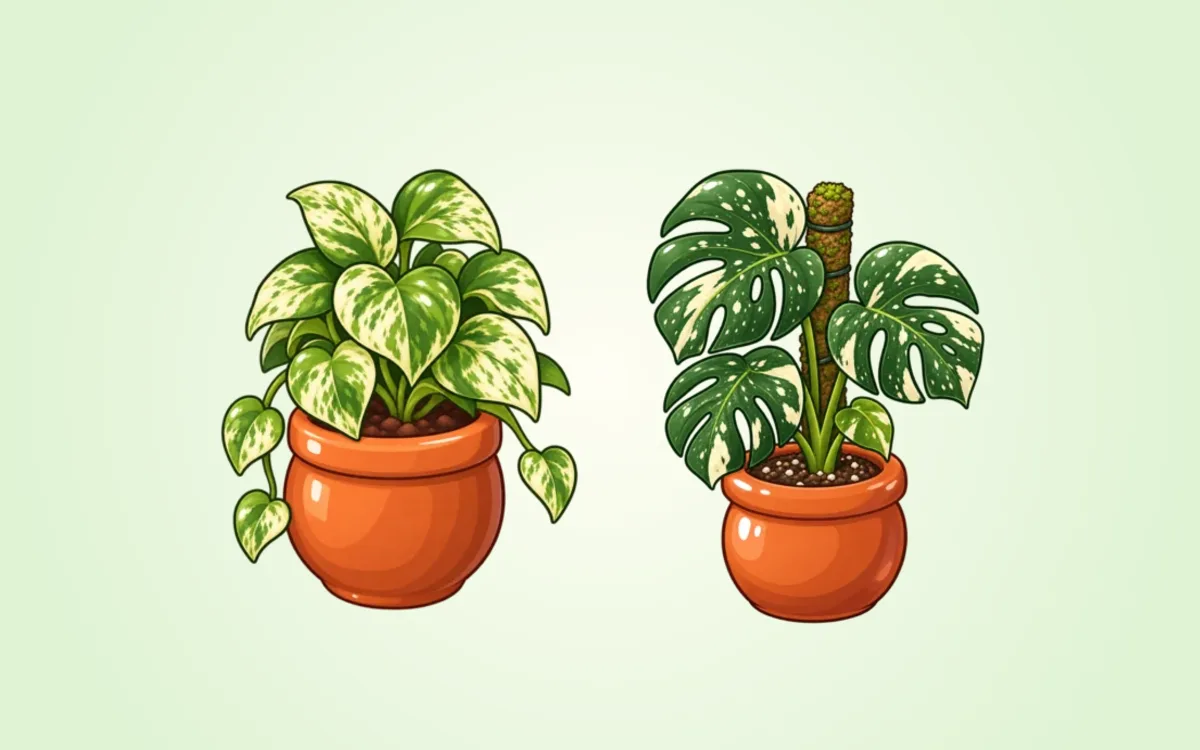
Monstera, philodendron, pothos, and alocasia all belong to the arum family (Araceae), which is why plant people call them “aroids.” When they struggle, the potting mix is a frequent culprit: a dense blend that stays wet for days after watering, leaving roots without air. The RHS warns in its philodendron guide that saturated compost can eventually cause root rot.
This guide explains what each ingredient does and gives mix recipes with actual ratios from horticultural institutions. We don’t recommend any brand; every ingredient here is sold at garden centers.
What Aroids Need From a Potting Mix
Monstera and many philodendrons climb trees in the wild and have thick roots, and the RHS recommends a chunkier mix for them. For both, the RHS calls for:
- A loose, free-draining mix that doesn’t stay wet for long
- A slightly acidic pH, around 5 to 6
- For monstera, a pot heavy enough to keep a top-heavy plant from tipping
Clemson HGIC adds the basics every houseplant mix should meet: dense enough to support the plant, able to hold moisture while letting excess water drain, and free of insects, diseases, and weed seeds.
Aroid Soil Ingredients and What They Do
| Ingredient | Role | Notes |
|---|---|---|
| Orchid bark | Creates large air pockets | The RHS calls bark great for the chunky roots of epiphytic plants; the base of orchid mixes |
| Perlite | Aeration and drainage | Heat-expanded volcanic rock; the RHS notes a shift toward locally sourced alternatives |
| Pumice | Aeration | Part of the aroid blend the RHS describes |
| Coco coir | Holds water; peat-free | Washed, milled coconut husk |
| Peat moss | Holds water and nutrients | Base of classic mixes; the RHS recommends peat-free options |
| Vermiculite | Holds a lot of water | The RHS says it absorbs five to six times its weight in water |
| Zeolite | Holds water and releases it as needed | Porous mineral |
| Worm castings | Natural nutrient source | Listed by the RHS as a natural fertilizer |
| Horticultural grit | Drainage | The RHS adds it to alocasia mixes |
| Garden soil | Avoid | Clemson HGIC says it contains too many bacteria |
The RHS’s aroid blend for monstera and philodendron lists coco coir, perlite, bark, coarse pumice, worm castings, zeolite, and activated charcoal, but gives no ratios. The recipes below do.
Aroid Soil Mix Recipes (With Ratios)
Measure parts by volume, with a scoop, cup, or bucket.
1. RHS mix for monstera and philodendron
- 2 parts orchid bark mix
- 1 part peat-free ericaceous (acidic) potting mix
The RHS recommends this blend for monstera and for philodendrons, from heartleaf philodendron to variegated cultivars like ‘Pink Princess’ and ‘White Knight’. It’s airy, and the ericaceous mix keeps the pH on the acidic side.
2. Cornell epiphytic mix (via Clemson HGIC)
- 1/3 finely ground fir bark
- 1/3 shredded sphagnum peat moss
- 1/3 perlite
- Plus lime and fertilizer per the original recipe
Clemson HGIC lists it for monstera, philodendron, dieffenbachia, hoya, and peperomia, among others.
3. Simple 1:1:1 foliage mix (Clemson HGIC)
- 1 part peat moss
- 1 part pine bark
- 1 part perlite
The easiest option. The RHS lists coco coir as a peat-free ingredient, though it isn’t part of Clemson’s original recipe.
4. RHS mix for alocasia
- 3 parts peat-free houseplant or multipurpose compost
- 1 part horticultural grit
The RHS notes that alocasias, such as Alocasia ‘Polly’ and ‘Frydek’, are prone to root rot from overwatering, especially during winter dormancy. The grit improves drainage.
5. RHS mix for peace lily
- 3 parts peat-free multipurpose compost
- 1 part perlite
The peace lily (Spathiphyllum) is an aroid too. The RHS recommends this simpler blend and a pot only a few centimeters larger than the old one, because excess compost in an oversized pot stays damp too long and can lead to root rot.
Peat or Peat-Free?
Classic recipes like the Cornell mix rely on peat moss. The RHS now recommends peat-free mixes, for these reasons:
- Peatlands store large amounts of carbon, and draining and extracting them releases carbon dioxide.
- Peatlands soak up excess rainfall, helping prevent local flooding.
- They’re home to specialized plants, animals, and microorganisms.
Peat-free mixes, per the RHS, are made from wood fiber, coco coir, composted bark (usually pine), or composted green waste. The RHS cautions that although they look and feel much like peat-based mixes, they need to be treated differently when watering and feeding. In practice, check moisture with your finger instead of relying on habits from peat-based mixes. The RHS also suggests reading the bag to see which plants a mix is meant for.
Bark and coir are natural fits for aroids, so going peat-free is easy: in recipe 3, swap the peat for coco coir or a peat-free potting mix.
How to Mix Aroid Soil Step by Step
- Set up a bucket, tub, or tarp to mix on.
- Measure the parts with the same scoop.
- Combine the dry ingredients until the bark and perlite are evenly spread.
- Moisten lightly. Bone-dry mix takes up water poorly. Aim for damp to the touch, not wet.
- Pot the plant in a container with a drainage hole. See how to repot houseplants.
- Water thoroughly until water drains out the bottom, then empty the saucer.
Skip the Gravel Layer
Putting rocks, gravel, or clay pebbles in the bottom of the pot is common advice that backfires. Illinois Extension calls it a myth: water “perches” in the soil just above the coarse layer and builds up until no air space is left. The soggy zone simply moves up, closer to the roots.
Clemson HGIC suggests covering the drainage hole with a single small pot shard instead of a layer of rocks. Real drainage comes from a drainage hole and a free-draining mix through the whole pot.
Terracotta or Plastic?
Penn State Extension says terracotta is ideal for succulents and plastic for plants that like to stay moist. Aroids in a chunky mix do fine in either, but terracotta dries out faster, so you’ll water more often. More in our guide on how to water houseplants.
Signs Your Potting Mix Isn’t Working
- Water sits on the surface or the mix stays wet for many days: too dense. Add bark or perlite.
- The mix dries out in a day or two and water runs straight through: too coarse, or the plant is root-bound. Add something water-retentive (coir or peat), or repot.
- Roots are rotting and the mix smells sour: repot into fresh, airier mix and cut off soft brown roots.
- Fungus gnats thrive in constantly damp mix: let the top layer dry out more between waterings.
How Often to Refresh the Mix
The RHS recommends potting houseplants on every two to three years, ideally in spring. A monstera can usually stay in its original pot for a year or two, then should be repotted every few years. Philodendrons can go at least a couple of years, until roots get densely packed.
Support for Climbing Aroids
Monstera and many philodendrons are climbers. The RHS recommends training a monstera onto a moss pole; if you keep the moss moist, the plant will eventually root into it.
FAQ
Can I use regular potting soil for aroids?
In a pinch, yes, but on its own a standard houseplant mix is often too dense for monstera or philodendron and stays wet too long. The RHS recommends a loose, free-draining, slightly acidic mix. Blending regular mix with orchid bark or perlite gets you most of the way there.
What is the best soil mix ratio for monstera?
The RHS recommends two parts orchid bark mix to one part peat-free ericaceous (acidic) potting mix for both monstera and philodendron. A simpler option from Clemson HGIC is equal parts peat, pine bark, and perlite.
Should I put rocks or gravel in the bottom of the pot for drainage?
No. Illinois Extension and Clemson HGIC both say a gravel layer doesn't improve drainage. Water perches in the soil above the gravel, which moves the soggy zone up closer to the roots. What matters is a drainage hole and a free-draining mix throughout the pot.
Can I use garden soil for houseplants?
It's not recommended. Clemson HGIC says garden soils contain too many bacteria and generally aren't suitable for container plants.
What soil does alocasia need?
The RHS suggests peat-free houseplant or multipurpose compost with horticultural grit added, about three parts compost to one part grit. Alocasias are prone to root rot, especially while dormant in winter.
Sources
- RHS — A guide to compost mixes for houseplants
- RHS — How to grow Swiss cheese plants
- RHS — How to grow philodendrons
- RHS — How to grow alocasias
- RHS — How to grow peace lilies
- RHS — Peat-free compost choices
- Clemson HGIC — Indoor Plants: Soil Mixes
- Illinois Extension — Container Drainage Options
- Clemson HGIC — Indoor Plants: Transplanting & Repotting
- Penn State Extension — Repotting Houseplants
- RHS — How to grow houseplants
Care information is general; every plant and home is different. Growing is simplified in the game.